
Nautica
Nautica 100% Cotton Boxer Pajama Shorts
This women's listing explicitly identifies 100% cotton and boxer-style pajama bottoms.
Check on AmazonThe details / Sleepwear guidance
A recognizable logo starts the verification process; it does not finish it.
Two sleep-shorts listings can display reassuring language while answering different questions. One may describe cotton’s origin. Another may name a textile testing standard. A third may show a green badge with no identifiable program at all. Treating those statements as interchangeable makes comparison less reliable.
The useful approach is to identify the precise claim, find the organization behind it, and connect its verification information to the exact garment. This guide explains that process without labeling any linked product certified or turning a certification into a personal comfort guarantee.
As an Amazon Associate I earn from qualifying purchases.
This women's listing explicitly identifies 100% cotton and boxer-style pajama bottoms.
Check on Amazon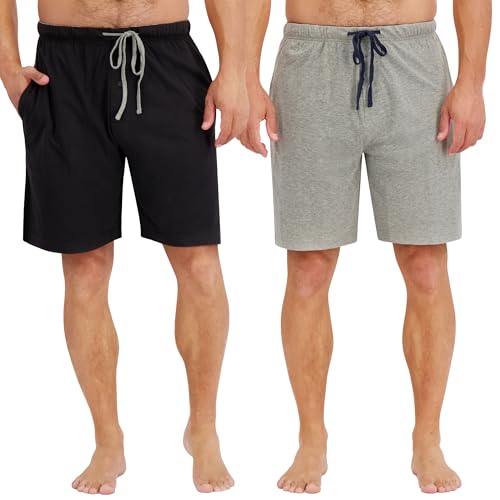
The listed 7.5-inch inseam makes these easier to compare for coverage than shorts described only as loose or lightweight.
Check on AmazonCopy the wording as it appears on the product page or label. Distinguish a named standard from broader terms such as natural, clean, responsibly made, or tested. Those phrases may prompt questions, but they do not tell you which certification program to verify.
Also note where the claim appears. A product-specific photograph, a brand’s general information panel, and a marketplace category filter are different pieces of evidence. A brand panel might describe a company initiative without saying that every garment participates. A filter can help you discover candidates, but the exact product still needs supporting information.
Record the selected style, color, size, and product identifier alongside the claim. This prevents an easy mistake: opening one version, changing the color, and continuing to rely on a certificate image that may relate to the earlier choice. Do not assume a change invalidates the claim either. Keep the identity question open until the information establishes which versions are covered.
These are examples of how to separate claim categories, not a ranking of certification programs. If the listing names a different program, begin with that organization’s own explanation and verification process. Avoid assuming that every leaf-shaped badge belongs to one of the familiar systems.
| Wording you encounter | What it gives you | What to establish next |
|---|---|---|
| Cotton, modal, or another fiber name | A material description to compare with the fiber label | Exact composition; no certification is established by the name |
| Organic-fiber wording without a named certificate | An origin-related claim | Which program, evidence, and product scope support it |
| STANDARD 100 with identifying details | A named tested-substance certification claim | Verify the label and connect it to the selected garment |
| A named finished-textile certification | A particular standard to investigate | Official result, scope, and exact product connection |
| A decorative badge or general brand statement | Marketing information that needs clarification | The actual program name and verifiable claim |
For OEKO-TEX labels, the official Label Check accepts a label number; the page notes that numbers are case sensitive. Enter the identifier carefully. A blurry image, missing character, or copied space can interfere with a useful check, so compare the entered string with the original before drawing conclusions.
If a result appears, read the information the program provides. Match the named standard and available identity or scope details against the listing. A positive lookup should not become a shortcut around the product connection. Your question is whether the result substantiates the particular claim on these shorts, not merely whether some number exists in a database.
If you get no result, the official OEKO-TEX page directs users to contact the organization. An unsuccessful lookup is a reason to investigate, not enough on its own to accuse a seller of misrepresentation. Preserve the number, label image, selected product information, and the exact uncertainty so the organization or seller can address it.
For other standards, use their own official routes. Search the organization’s site directly if a retailer’s link is unclear. A copied certificate graphic may be useful evidence to inspect, but it is not the same action as independently reaching the issuer’s verification page.
A vague request for proof often returns a vague reassurance. Ask instead for the certificate or license details supporting the stated claim on the exact style and selected variant. Include the product identifier and the wording you are trying to verify. If you have found a result but cannot connect its scope to the finished shorts, ask specifically about that connection.
The answer may provide a clear explanation, reveal that the statement applies only to a component, or leave the question unresolved. Keep those outcomes distinct. A component certificate can be meaningful within its scope without automatically supporting a broader claim about the complete product.
You do not need to conduct a supply-chain audit to make a personal purchase decision. You do need enough clarity for the claim you intend to rely on. If certification is a non-negotiable requirement and the exact product link remains unresolved, leave that candidate unconfirmed rather than treating uncertainty as a pass.
Imagine you are comparing three hypothetical sleep-shorts pages. Page A calls the fabric organic cotton but shows no named certification. Page B shows STANDARD 100 wording and a readable label number. Page C contains a brand-wide panel about certified textiles but does not identify the displayed pair as part of that program.
Your first notes should be different. For A, you need the evidence behind the origin claim and any claimed certification. For B, you have a specific official lookup to perform and then a product connection to assess. For C, you need the brand or seller to state whether this exact style is covered. Counting all three as certified options would erase the central differences.
Suppose B’s lookup returns information, but the listing photograph has no model identifier and the available result leaves scope unclear to you. B is further along the verification process than A or C, yet it is not automatically settled. Ask the narrow scope question with the number and garment identity attached.
Now suppose the seller for C supplies a readable label image from the selected style and an official verification route. Your assessment can change because new evidence resolves the original gap. Good verification is not about remaining suspicious. It is about allowing the evidence to answer a clearly stated question.
The cotton collection is a material shortlist, not a list of certified garments. If you are considering Nautica cotton pajama boxer shorts or the Hanes cotton-labeled two-pack, request exact certification evidence before relying on such a claim. The Nautica offer on Amazon has no verified certificate in this guide. Neither linked product is presented as a certified recommendation.
When the material wording itself is unclear, use the fabric-label guide before comparing a separate certification claim.
After verification, return to the ordinary garment decision. Compare the correct size chart, coverage, waistband, pockets, and care demands. A confirmed claim can satisfy one requirement while the shorts remain unsuitable for your body measurements or laundry setup.
Nor should certification wording be converted into an allergy promise, a sleep-health claim, a guarantee of softness, or an assurance that every person will tolerate the garment. Those are different questions. This guide does not make them and does not use a badge to rank one fiber as universally better than another.
A simple buying note can keep the decisions separate: “Certification requirement verified for this style; size still unresolved,” or “Fit information suitable; certification claim unconfirmed.” That is more useful than a single green tick that conceals several unanswered questions.
Before ordering, retain the exact product identity, relevant claim wording, and the official information you relied on. This is a practical reference if the page changes or the received label differs. It is not a substitute for the issuer’s current information.
When the shorts arrive, compare the relevant label and style identity with your order record. A mismatch is a concrete question for the seller; do not wash away the opportunity to document it first. The separate arrival inspection guide covers that first examination. If the problem is conflicting page information before purchase, use the listing-conflict guide to organize the discrepancy.
No. It identifies a tested-substance standard. Organic-fiber claims address a different question and require their own relevant evidence.
Recheck the exact identifier and follow the issuer’s instructions for help. OEKO-TEX directs users to contact it when Label Check returns no result. Treat the claim as unresolved while you investigate.
This guide has not verified certification for those exact offers. They are garment examples; their links and cotton wording should not be interpreted as certification claims.
A usable certification claim has a recognizable standard, verifiable identifying details, and a clear connection to the exact shorts. Keep the scope precise, resolve gaps through the issuer or seller, and evaluate fit and care as separate purchase requirements.
As an Amazon Associate I earn from qualifying purchases.
This women's listing explicitly identifies 100% cotton and boxer-style pajama bottoms.
Check on AmazonThe listed 7.5-inch inseam makes these easier to compare for coverage than shorts described only as loose or lightweight.
Check on AmazonThe details
Read the component, the fiber name and the percentage as one statement.
The details
When a product page disagrees with itself, preserve the exact offer and isolate the field that matters.
The details
A calm first inspection helps distinguish a wrong item, an observable defect, and a fit preference.