Hanes
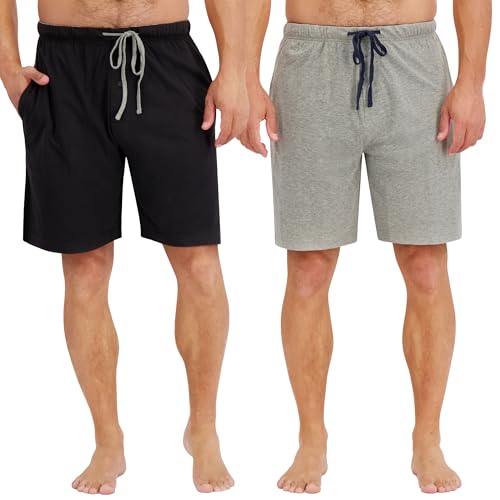
Hanes Cotton Pajama Shorts 2-Pack, 7.5 Inch
The listed 7.5-inch inseam makes these easier to compare for coverage than shorts described only as loose or lightweight.
Check on AmazonThe details / Sleepwear guidance
Turn “runs small” into a precise fit question you can answer with measurements.
“Too tight” and “far too loose” can appear beneath the same pair of sleep shorts. The reviews may be describing different sizes, different body proportions, different versions, or different expectations. Neither sentence tells you what will happen on your body.
Reviews become more useful when you extract the garment, the location of the fit issue, and the context behind the judgment. You are looking for clues that direct your next check, not a vote that replaces the size chart.
As an Amazon Associate I earn from qualifying purchases.
The listed 7.5-inch inseam makes these easier to compare for coverage than shorts described only as loose or lightweight.
Check on Amazon
A stated 7-inch length, cotton knit construction, drawstring and elastic waistband make this one of the clearer title-level specifications.
Check on AmazonCheck whether the review names or displays the same style you are considering. A shared product page may contain more than one color, pack, or design. If the identity is unclear, keep the comment in a lower-confidence group rather than assuming it applies to your selected pair.
Size matters twice: the size the reviewer ordered and the size they normally expected to need. “I ordered Large and it was loose” is more specific than “runs big,” but it still lacks body measurements or a reference garment. “I usually wear Large” also does not identify a universal dimension across brands.
Look for changes of selection within the review. Someone may have returned one size and kept another, or may be comparing a newly ordered pair with an older version. Those details can be informative, but they should not be compressed into a single size-up or size-down instruction.
A pair can fit the waist while feeling restrictive at the thigh. It can have enough room through the hips while the hem falls higher than the wearer expected. A review that says only “small” may be combining those separate experiences.
Translate the description into a location: waistband, seat, crotch, leg opening, rise, or length. Then identify what the reviewer actually observed. Did the waistband feel firm, did the hem land above a preferred point, or did the shorts move during sitting? Keep the observation and the reviewer’s conclusion in separate notes.
This prevents a common response to ambiguous reviews: changing the overall size to solve a single unknown feature. A larger size might alter several dimensions, and you do not know whether it will change the one you care about in the desired way. The next step should be a feature-specific check, such as obtaining leg-opening measurements, rather than an automatic size adjustment.
| Review wording | Useful clue | Follow-up question |
|---|---|---|
| Waist is fine but legs feel narrow | The complaint is localized at the leg | What is the opening measurement in my size? |
| Much shorter than expected | Coverage differs from an expectation | What is the listed inseam and how does it compare with mine? |
| Bought the usual size and it is huge | The reviewer’s reference standard may differ | What measurements and fit preference informed that expectation? |
| Comfortable until I sit down | Movement changes the wearer’s experience | Where does tension appear, and is relevant garment context provided? |
| New pair fits differently from the old one | Versions or garment histories may differ | Are the style code, size, and care history actually comparable? |
A reviewer’s relevant body measurement can help you understand their relationship to a brand’s chart. Height alone is rarely enough to explain waist fit or where a shorts hem will sit. Nor does a shared weight establish matching proportions. Use the context that connects directly to your concern.
A measured garment can be a useful reference if the method is clear. An inseam measured along the inside leg is different from overall side length. A relaxed waistband measurement is different from a stretched maximum. If a reviewer provides a number without defining it, treat it as a lead for clarification rather than a precise specification.
Your own favorite pair can supply a better comparison point than a stranger’s general clothing size. Measure the feature that matters using the same defined method, then compare it with reliable candidate information. The measurement guide helps build that reference; the review tells you which feature deserves attention.
“Baggy” can be praise from someone who wants generous lounge room and criticism from someone who wants a neat silhouette. “Long enough” depends on a desired hem position. Even a well-described review includes a preference judgment.
Ask whether the reviewer’s goal resembles yours before adopting the conclusion. A person seeking close-fitting shorts might dislike exactly the looseness you want. You can still use their factual description while reaching a different decision. That is not dismissing the review; it is using the context properly.
Avoid translating fabric adjectives into fit measurements. Soft, thin, substantial, or stretchy may describe a wearer’s impression, but they do not tell you an exact waist range or leg opening. They also do not prove comparative fabric performance or long-term durability.
Consider four invented notes for the same hypothetical shorts. They are examples of reading technique, not reviews collected for a product on this site. Note A says “runs small” without naming a size. Note B identifies Medium and says the waistband fits but the thighs feel close. Note C identifies Large and says the wearer prefers the extra room. Note D names Medium in an older color version and compares it with a pair washed many times.
If your concern is thigh room in Medium, B is the most direct lead. It still cannot predict your fit without measurements or relevant body context. C tells you about a preference in another size. A provides too little detail for a targeted conclusion. D may highlight a version or care-history question, but its comparison is not controlled.
The actionable result is not “three out of four suggest sizing up.” The notes do not support that count. A better next step is to request the selected Medium’s leg-opening measurement and compare it with a comfortable pair you own. If the candidate’s waist dimensions are already appropriate, understand the leg shape before changing the whole size.
Suppose you obtain the measurement and it closely matches a pair you like. B’s experience remains real as a hypothetical example, but it need not decide your purchase. Suppose instead the dimension is smaller than your reference. Now the review and garment comparison point toward the same feature, giving you a concrete reason to reconsider that size or cut.
When several clearly relevant reviews independently describe the same feature, that pattern can justify checking it first. It does not establish a failure rate, a universal fit result, or a brand-wide truth. You would need a defined dataset and comparable evidence to make those stronger claims.
Do not manufacture consensus by combining comments about different versions or unrelated fit locations. Five mentions of small can include short length, a firm waist, narrow legs, and mistaken expectations. Grouping by the actual issue is more useful than counting a shared adjective.
Recent comments can help identify a possible version change, while older detailed comments may still offer useful context. Date alone is not a model match. Read for the version and selection, and resolve material contradictions with current exact-product information.
The selected Hanes 7.5-inch two-pack is Large in Heather Grey/Black; the Amazon Essentials 7-inch two-pack is also listed as Large, in Black/Charcoal Heather. Those shared size labels do not make reviews interchangeable. Hanes explicitly labels its inseam; Amazon Essentials’ 7-inch wording needs a measurement-path and size-basis check. Reviews can help identify other fit questions worth asking.
If you are reading the Amazon Essentials offer on Amazon, keep comments about its selected model separate from opinions about other Amazon Essentials shorts. Use the men’s collection if the reported issue points you toward a different cut, and compare the new candidate on its own evidence. This guide has not established a review consensus for either linked product.
Write a one-line result from your reading: “Several relevant comments make leg opening worth checking,” or “The available reviews do not provide enough context to change my size choice.” Either can be useful. The goal is a better decision, not a requirement to extract certainty from every page.
If reviews and the listing still conflict on a specification, use the listing-conflict process. If the issue is how to interpret the manufacturer’s chart, go to the size-chart guide. Reviews work best as a companion to those clearer forms of evidence, with their subjective judgments left visible.
First determine what small means: waist, thigh room, rise, or length. Then compare the relevant measurements and the exact style. An overall size change is not a reliable answer to an unspecified fit complaint.
They may provide context, but those two figures do not establish matching proportions or preferences. Measurements directly related to the fit issue are more informative.
There is no simple count that proves a universal result. Relevance, model identity, measurement context, and the specific issue matter more than adding together ambiguous comments.
A useful review narrows your next fit check. Match the style, identify the size and fit location, and compare the reviewer’s context with your own reference garment. Keep repeated reports as investigative clues and subjective preferences as preferences.
As an Amazon Associate I earn from qualifying purchases.
The listed 7.5-inch inseam makes these easier to compare for coverage than shorts described only as loose or lightweight.
Check on AmazonA stated 7-inch length, cotton knit construction, drawstring and elastic waistband make this one of the clearer title-level specifications.
Check on AmazonThe details
A consistent measurement method is more useful than a very precise number taken from an unclear starting point.
The details
Before finding your row, find out what the chart is actually measuring.
The details
When a product page disagrees with itself, preserve the exact offer and isolate the field that matters.
The details
Turn cooling language into specific, answerable questions.