Hanes
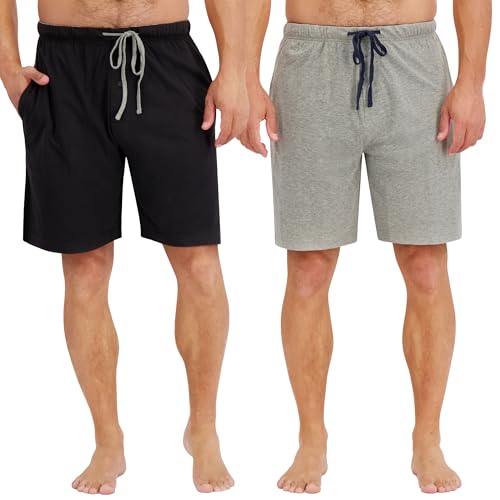
Hanes Cotton Pajama Shorts 2-Pack, 7.5 Inch
The listed 7.5-inch inseam makes these easier to compare for coverage than shorts described only as loose or lightweight.
Check on AmazonThe details / Sleepwear guidance
An extra layer is an outfit choice. Start with what the shorts actually cover.
There is no dress code requiring an extra layer beneath adult sleep shorts. There is also no reason to abandon one you prefer. The useful questions are practical: what openings do the shorts have, do they include a liner, and how does the combination feel when you sit or lie down?
Once those details are clear, you can choose deliberately instead of relying on a blanket rule about what people supposedly wear to bed.
As an Amazon Associate I earn from qualifying purchases.
The listed 7.5-inch inseam makes these easier to compare for coverage than shorts described only as loose or lightweight.
Check on Amazon
This is the standard Originals Comfywear two-pack, kept distinct from the separately named Supersoft 3.25-inch model.
Check on AmazonLook inside the garment before deciding what belongs underneath. Is there a sewn-in liner? Is the front closed, overlapping or fastened? Are visible buttons functional or decorative? These details affect what an extra layer would actually change.
A sleepwear listing does not settle every answer. Some shorts have an opening at the front; others have a sewn-shut front panel. Some are boxer-style without being sold as underwear. Work from the actual garment rather than treating a category name as a complete description.
Next, assess the shorts in the positions you use. Stand, sit with both feet on the floor, then bend one knee as you might on a sofa. Check the front and leg openings. If the resulting coverage matches your preference, an additional layer remains optional rather than a fix for an assumed problem.
If coverage does not match your preference, name the source. A gaping fly, an open leg and a transparent fabric are different concerns. Underwear may change what is visible, but it does not close the garment’s opening or alter the outer fabric itself.
| Ask yourself | If yes | If no |
|---|---|---|
| Do the shorts already have an inner layer? | Assess whether you want another layer in addition to it | Continue to coverage and personal preference |
| Do the shorts provide the coverage I want when seated? | Choose a separate layer only if you prefer it | Compare an extra layer or a different shorts construction |
| Does the combination feel easy at waist, seat and legs? | The layered outfit may suit you | Identify the overlapping band or seam before changing size |
| Does my planned care routine suit both pieces? | Keep following each garment’s instructions | Choose compatible pieces or handle them separately |
This path gives you options, not an order to add or remove clothing. You can reasonably arrive at different answers for two pairs of shorts because their front construction, lining and cut differ.
An extra layer can give you a separate garment between the shorts and your body. It can also provide coverage beneath an open front or leg, depending on its own design. If you like that arrangement, it is a sufficient reason to choose it.
It cannot make a small pair of shorts larger. If the outer garment already feels close through the seat, adding another layer may leave less usable room. Nor can it ensure that a loose outer leg stays in place. The two pieces can still move differently.
If the primary problem is the outer shorts repeatedly opening farther than you want in a shared space, consider whether a different front or leg construction would be more straightforward. Adding a layer may work, but you should not have to accept an outer garment you dislike merely to make it wearable.
Keep visual coverage and garment feel separate. You might prefer the coverage of the layered combination but dislike two waistbands. That is a real tradeoff to solve through the specific pieces, rather than an argument that layering itself is wrong.
Put on the complete outfit and notice where the bands sit relative to each other. They may overlap, sit immediately adjacent or occupy separate positions. None of those arrangements guarantees a particular feel. What matters is whether the combined contact works for you.
Sit down without first repositioning the bands. If one becomes trapped under the other, note that location. If the upper band pushes the other piece downward, try a different compatible cut rather than repeatedly tightening the outer drawstring.
Also inspect the knot, if present. A large outer knot directly over an inner band can create a concentrated bundle. The problem may be the arrangement, not the overall waist circumference. A simpler tie or different placement within the garment’s intended design may be enough; pulling the shorts excessively tight is not a useful solution.
When the shorts feel restrictive even by themselves, address that first. The tight-waistband diagnostic distinguishes band contact from room through the rest of the shorts. Layering should not become a way of explaining away an already unsuitable fit.
The next useful observation is where the seams and hems meet. An underwear leg hem can lie beneath a shorts seam or in a fold created when you bend. You may not notice it while standing, so include a seated and a lying position.
Move normally, then pause before straightening either layer. Is the inner garment bunched? Has the outer leg caught above it? Or do both pieces settle in a way you barely notice? Those are observations about this combination, not proof that a particular fiber always slides or stays still.
If the inner garment gathers only under one specific pair of shorts, compare the same layer under another pair before replacing everything. If the inner layer bothers you across several garments, it may be the more useful piece to reconsider. Change one variable at a time so the comparison teaches you something.
Before adding another layer to compensate for an outer garment, consider whether the shorts themselves should change. If an opening is the only reason you want underwear, a different front construction may be a simpler outfit. If you prefer a separate inner garment regardless of coverage, preserve that preference while choosing enough room for the combination.
When browsing sleep shorts, make the front and lining your questions about a candidate such as Hanes’ pajama shorts. Inspect the selected listing’s interior and front views before deciding how many layers you want. A photo of someone wearing the shorts does not establish what they have underneath.
A useful product question is precise: “Is the front sewn closed?” or “Does this style have an attached liner?” Asking whether a garment is comfortable without underwear is less likely to produce an answer that transfers reliably to your body and preferences.
Adding underwear does not turn the outer garment into an item that never needs care, and omitting it does not establish a universal washing timetable. Decide when garments need laundering based on their use and condition, then follow the instructions attached to each piece.
The FTC’s garment-care guidance explains that care instructions account for the finished item, including its components. For this outfit decision, remember that two pieces may have different directions. Similar-looking fabrics are not enough to assume the same drying method.
If you prefer keeping an outfit together through laundry, choose pieces with compatible instructions. If you are comfortable sorting them separately, different directions may be manageable. The layering choice can reflect that practical preference without becoming a hygiene prescription.
You do not have to settle the question once for your entire wardrobe. A lined athletic-style garment, an open boxer-style short and a closed-front pajama short can reasonably lead to different decisions. Evaluate the pair in front of you and the setting in which you plan to wear it.
They may be worn as the only lower garment if their construction and coverage suit your preference. Some people still choose a separate layer. The sleepwear label does not itself decide the matter.
There is no automatic requirement. Assess the liner and then the full combination if you want another layer. Pay attention to overlapping bands and leg hems rather than assuming more layers will feel better.
No universal schedule follows from that choice. Consider how each garment was used and its condition, and follow its care instructions. An extra layer does not remove the need to care for the shorts.
Wear the number of layers that gives you the coverage and feel you want. If underwear solves an opening issue but creates a bulky band or hem, compare another pairing—or shorts with a different front or leg shape.
As an Amazon Associate I earn from qualifying purchases.
The listed 7.5-inch inseam makes these easier to compare for coverage than shorts described only as loose or lightweight.
Check on AmazonThis is the standard Originals Comfywear two-pack, kept distinct from the separately named Supersoft 3.25-inch model.
Check on AmazonThe details
The useful differences are in the cut and openings, not simply the name on the package.
The details
Roomy legs do not guarantee a comfortable band. Isolate what is happening at the waist.
The details
A useful running feature can feel very different when it sits beneath your hip.
The details
A coordinated set works best when both pieces fit the same purchase decision.