Hanes
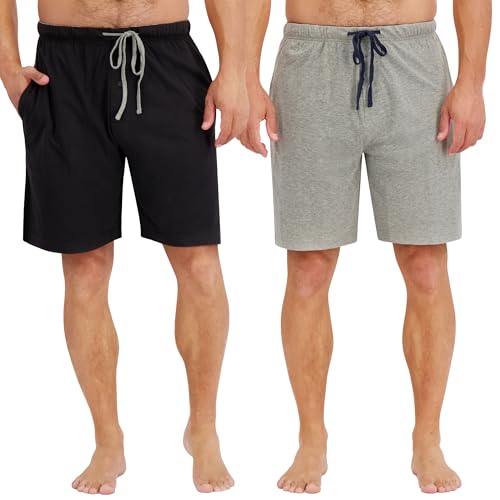
Hanes Cotton Pajama Shorts 2-Pack, 7.5 Inch
The listed 7.5-inch inseam makes these easier to compare for coverage than shorts described only as loose or lightweight.
Check on AmazonThe details / Sleepwear guidance
The useful differences are in the cut and openings, not simply the name on the package.
A loose pair of boxers and a pair of pajama shorts can look almost identical on a hanger. Put them on, sit down and turn sideways, however, and the differences may become obvious: one has more front fabric, one has a longer leg, and one has an opening that needs closer attention.
The most useful comparison is between the actual garments you are considering. Sleep shorts, boxers and boxer briefs are broad categories with overlapping features. None of those names tells you everything about coverage, waistband feel or how much room there is through the seat.
As an Amazon Associate I earn from qualifying purchases.
The listed 7.5-inch inseam makes these easier to compare for coverage than shorts described only as loose or lightweight.
Check on Amazon
A stated 7-inch length, cotton knit construction, drawstring and elastic waistband make this one of the clearer title-level specifications.
Check on AmazonWrite down your main reason for considering a change. Perhaps your current boxers expose more leg than you want when sitting. Perhaps your pajama shorts have excess fabric at the front. Or perhaps you like the close fit of boxer briefs but dislike their leg hems. These are different problems. A different product name will not necessarily solve any of them.
For a garment worn only in a private bedroom, your preferred feel may decide the matter. If you also want to wear it while making breakfast or sharing a living room, coverage in ordinary seated positions deserves more weight. That is a personal boundary, not a rule about which garments adults are allowed to wear at home.
Think of purpose as a useful starting clue. A listing that explicitly calls an item pajama or sleep shorts is presenting it as sleepwear. An underwear listing is presenting a different intended use. Still, inspect the details. A sleepwear label does not guarantee an opaque fabric, a closed front or a particular amount of leg coverage.
| Question | Sleep shorts | Boxers | Boxer briefs |
|---|---|---|---|
| How do the legs usually sit? | Often loose, with substantial variation in length and opening | Usually loose around the thigh | Usually close to the thigh |
| What front detail needs attention? | Functional, decorative or absent fly | Fly overlap and any fastening | Front shaping, seams and any fly |
| What should you check while seated? | Hem height and the view through the opening | Opening spread and front coverage | Leg-band feel and whether the fabric pulls |
| What can the category fail to tell you? | Actual ease, opacity and front room | Whether this pair meets your lounge coverage preference | How the shaped front fits your preference |
These are shopping distinctions, not mandatory design standards. Boxer-style pajama shorts, for example, can have the appearance of boxers while being explicitly sold as sleepwear. Conversely, a longer boxer brief is still a close-fitting garment; its extra length does not make it equivalent to a loose pajama short.
Avoid using a single photograph to settle the comparison. A standing pose conceals how the leg opening spreads when a knee bends. A front photograph may hide the fly overlap. Fabric held away from the body can look roomier than it feels after the waistband settles into its normal position.
A garment can be loose at the thigh yet shaped closely at the front. Another can have ample front fabric but a relatively narrow seat. When someone says a pair feels too baggy, it helps to name the location: front, side hip, rear seat or leg opening.
Front shaping is especially relevant when trying a category you do not usually wear. A shaped panel may provide space in one area that you do not personally want. Flattening that space by sizing down can also reduce room elsewhere. The result can be a neater-looking front coupled with less comfortable movement through the hips or thighs.
Try this simple comparison with two garments you already own. Place each at its natural waistband position, look at the front without pulling the fabric flat, then sit with both feet on the floor. Notice whether the excess folds disappear, move or become a concentrated lump. You are observing the cut on your body, not deciding whether the garment matches a universal silhouette.
If one garment needs constant repositioning to make the front feel right, a different cut is a more promising experiment than repeatedly changing the same size. The size-chart guide explains how to separate a sizing problem from a mismatch between waist and hip proportions.
Sleep shorts and boxers can each have an opening or a closed front. Boxer briefs can also differ in fly design and front shaping. Do not rank the categories by a feature that varies within them: inspect the candidate’s actual front and check its coverage when seated.
If you want a functional opening, a decorative button or stitched outline is not enough. If you prefer a closed front, look for that construction explicitly. The button-fly guide handles the detailed inspection; for this comparison, record whether each candidate has the front arrangement you want.
A close boxer-brief leg, a loose boxer opening and a longer pajama-short leg can reveal different amounts when seated. Compare them in the same position. Inseam is one useful difference, but the view through an open leg also matters. Use the leg-opening guide if that detail is deciding the choice.
For a person moving from short boxers to a separate lounge bottom, Hanes’ listed 7.5-inch pajama shorts provide a specific longer-leg candidate to compare with the existing pair. Inspect the selected Hanes listing or explore men’s sleep shorts after deciding the front and leg shape you want. Added length is the relevant comparison here; it does not settle the fly.
Imagine an adult choosing one garment for both bed and a shared kitchen. Pair A is a loose boxer with a front overlap and an open leg. Pair B is a pajama short with a closed front and a longer loose leg. Pair C is a boxer brief with a shaped front and a close thigh. These are hypothetical garments, not specifications of the products linked here.
The wearer first sits in each pair. A exposes more through the leg opening than they prefer. C provides the desired seated coverage but its shaped front feels unnecessary and its close leg feels distracting. B meets the coverage preference and gives the desired front room. B wins for this person because of those observations, not because sleep shorts are categorically superior.
The same comparison also helps when you like the front of one garment and the legs of another. You might seek a pajama short with a less generous front, or a boxer-style sleep short with more leg length. You do not have to accept every typical feature of a category as a package.
Compare garments in sizes intended to fit you, with their waistbands at the positions they naturally occupy. A stretched, undersized boxer brief beside an oversized pajama short tells you little about the categories. Start with reasonable fit, then assess the shape.
Keep the setting similar. Use the same chair and the same few movements. Empty pockets, loosen an overtightened drawstring and avoid arranging the fabric into an unusually flattering position. You want to know what happens after ordinary movement, not what can be achieved for one mirror inspection.
A useful note contains four observations: front room, leg feel, seated coverage and opening security. That is enough to narrow the next search. Questions about adding a separate layer have their own practical tradeoffs, covered in wearing underwear with sleep shorts. They do not change the underlying cut of the garment you are evaluating.
Not necessarily. Boxer-style describes an appearance or cut; the listing may still identify the garment as sleepwear. Compare the actual front, leg openings and coverage instead of treating the word boxer as a complete specification.
No. A close leg fit does not tell you how the front is shaped. Examine the panel and try the garment in ordinary seated positions; sizing down solely to remove front folds can compromise room elsewhere.
It is only one part of coverage. Leg-opening width, front construction and opacity also matter. Check the positions in which you expect to wear the garment, especially sitting with a knee bent.
Choose the pair whose front shaping, leg fit and openings suit your use. Category names narrow the search; a seated coverage check and a clear preference for loose or close legs make the final choice.
As an Amazon Associate I earn from qualifying purchases.
The listed 7.5-inch inseam makes these easier to compare for coverage than shorts described only as loose or lightweight.
Check on AmazonA stated 7-inch length, cotton knit construction, drawstring and elastic waistband make this one of the clearer title-level specifications.
Check on AmazonThe details
An extra layer is an outfit choice. Start with what the shorts actually cover.
The details
Choose how much leg you want covered, then check what the extra fabric does when you move.
The details
Before finding your row, find out what the chart is actually measuring.
The details
A useful running feature can feel very different when it sits beneath your hip.