
Nautica
Nautica 100% Cotton Bermuda Pajama Shorts
Bermuda styling makes this the longer-coverage alternative to Nautica's women's boxer pajama shorts.
Check on AmazonThe details / Sleepwear guidance
Choose how much leg you want covered, then check what the extra fabric does when you move.
The choice between shorts and pajama pants often gets framed as a seasonal rule. A more useful question is what you want the garment to do around your legs. Do you want your calves uncovered? Do you dislike bare legs touching a chair? Does fabric around your knees bother you when you bend them?
Those preferences can point in different directions, even in the same room. This guide compares coverage and movement without assigning a required garment to a temperature or promising a better night’s sleep.
As an Amazon Associate I earn from qualifying purchases.
Bermuda styling makes this the longer-coverage alternative to Nautica's women's boxer pajama shorts.
Check on Amazon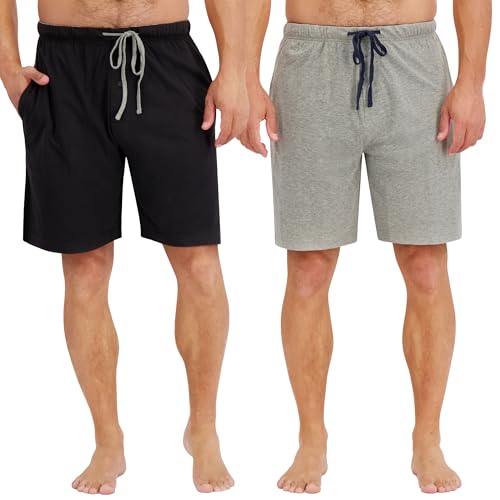
The listed 7.5-inch inseam makes these easier to compare for coverage than shorts described only as loose or lightweight.
Check on AmazonTwo decisions are hidden inside “shorts or pants.” The first is how much of your legs you want covered. The second is how much fabric you want around them. Pants offer more coverage, but a narrow pajama pant and a very wide one can feel quite different. Shorts expose more leg, but they can also have generous, folded fabric around the seat and upper thigh.
Start by naming the area that matters. If you dislike fabric at the knee, shorts that end above the knee remove that particular contact. If you want your calves covered while sitting on a sofa, shorts cannot provide it. If the concern is excess material around the hips, changing length alone may leave the problem unchanged.
This distinction prevents an expensive round of buying different lengths when the real issue is cut. A relaxed pant can have a good seat shape for you. A loose-looking short can still pull across your hips. Length is the visible difference, but it does not control every part of fit.
| Your priority | Start by considering | What to inspect |
|---|---|---|
| No material around knees or calves | Shorts ending above the knee | Where the hem sits after you sit down |
| Leg coverage on a chair or sofa | Pajama pants | How far the hem moves up with bent knees |
| Less loose fabric near the ankles | Shorts, or pants with a less open lower leg | Whether a cuff itself feels welcome |
| A familiar outfit for bed and breakfast | Whichever meets your coverage preference | Seated openings, opacity and overall fit |
| Freedom to bend the knees | Either category with enough usable room | Pulling through the seat and folding behind the knee |
The table is a starting point for a try-on, not a verdict on whole categories. A shorter garment can still pull when you bend a knee if its seat or thigh shape is wrong for you. Full-length pants can allow easy movement when their shape works with your preferred positions.
Standing fit is only part of this decision. Sit with your feet on the floor and then draw one knee toward you as you might on the couch. Observe where a short hem moves and where a pant leg gathers. Do this without holding either garment in place.
With shorts, ask whether the new hem position still gives the coverage you want. A pair that looks modestly long when standing may move noticeably higher when seated. That is not automatically a fault. It becomes a problem if the resulting position falls outside your personal coverage preference.
With pants, look at the fabric behind the knee, over the shin and around the ankle. Some people barely notice these folds; others find them distracting. Avoid assuming that every fold means the pants are too large. Bending a clothed leg naturally changes the arrangement of fabric. The useful question is whether you want that arrangement.
Then stand without first straightening the garment. Does the short hem settle where you expect? Do the pant legs need a small shake? A minor adjustment may not matter to you, but a garment that requires repeated rearrangement is worth comparing with another cut.
You do not need a formal overnight trial to reject an obvious mismatch. On a clean surface, lie in a few positions you normally use. Notice where each garment makes folds and whether moving a leg requires you to carry a bundle of fabric with it.
For shorts, pay attention to the leg opening at the side and inner thigh. For pants, pay attention to the knee and lower-leg material. Keep your bedding the same during the comparison so you are not changing two things at once.
This is an observation of your own preference, not a textile performance test. A few minutes cannot establish long-term durability or prove how a garment will behave throughout the night. It can tell you that you dislike a cuff pressing at your ankle, or that you prefer having no fabric across your knee.
A full-length pant also deserves an ankle check when you bend your knees. An open hem may move upward, while a cuff tends to keep its edge closer to the ankle. Either can suit you, but if you dislike the cuff itself, that preference does not rule out all pajama pants. Compare the lower-leg finish as well as the overall length.
You do not have to jump from a very short pajama bottom to an ankle-length pant. A longer sleep short may provide the upper-leg coverage you want while leaving the calf exposed. Its position depends on your proportions, rise and the particular cut, so treat labels such as Bermuda or knee length as descriptions to investigate.
If you want to test the middle ground, compare your existing pants with Hanes’ listed 7.5-inch pajama short. The stated inseam gives you an actual length to place beside a familiar short; the Nautica pajama Bermuda option offers a separately described longer-short style. Browse longer sleep shorts or inspect the Hanes 7.5-inch listing to make a length comparison that still leaves the lower leg uncovered.
A longer short remains a short: it does not provide full calf coverage. Likewise, a pant rolled up at the hem is a temporary experiment, not an exact substitute for a well-proportioned short. The rolled material introduces a bulky fold that a purpose-made hem would not have.
A very substantial short and a thin pajama pant differ in more than coverage. If you want to understand your preference for uncovered legs, compare similar-feeling garments where possible. This guide does not assign temperature ratings or a warmth winner from length alone.
Also distinguish coverage from contact with the surface beneath you. On an armchair, a pant can place fabric between your calf and the chair edge. A short leaves that part of the leg directly exposed. If that contact is your main concern, it is the lower-leg coverage itself you want, even if you otherwise prefer the reduced fabric of shorts.
Before choosing, name one standing position, one seated position and one lying position the garment should handle. For each, write the lowest acceptable coverage and the most bothersome fabric contact. That gives you a small, concrete brief to use while reading product descriptions.
For example: standing, no hem at the ankle; seated, upper thighs covered; lying, no material behind the knees. That brief makes shorts a sensible starting category. Another person might write: standing and seated, lower legs covered; lying, no narrow ankle cuff. That brief points toward an open-hem pajama pant.
A final useful question is whether the garment still suits you once you get out of bed. If you want lower-leg coverage during breakfast but prefer exposed calves in bed, changing garments may be more satisfactory than forcing one length to satisfy conflicting jobs. If one outfit must cover both, decide which of those coverage preferences matters more.
Only if the part you dislike is removed by the shorter length. If the waistband or seat is the problem, a different cut may help more than changing the hem.
They can if you want upper-leg coverage while leaving the lower leg exposed. They cannot provide the calf and ankle coverage of full-length pants, and knee-length descriptions do not predict an exact hem position for every person.
Use the season as context, then consider your own coverage and fabric preferences. No season requires one garment length, and the construction of individual shorts and pants varies.
Choose shorts when uncovered lower legs and less fabric around the knees match your preferences. Choose pants when full-leg coverage matters more. Confirm the decision while sitting and lying down, where their practical differences are easiest to notice.
As an Amazon Associate I earn from qualifying purchases.
Bermuda styling makes this the longer-coverage alternative to Nautica's women's boxer pajama shorts.
Check on AmazonThe listed 7.5-inch inseam makes these easier to compare for coverage than shorts described only as loose or lightweight.
Check on AmazonThe details
Use a pair you know as the reference; a height chart cannot choose your preferred hem.
The details
Waistband-free sleepwear trades one point of contact for a different kind of movement.
The details
Before finding your row, find out what the chart is actually measuring.
The details
The useful differences are in the cut and openings, not simply the name on the package.
The details
A useful running feature can feel very different when it sits beneath your hip.
The details
Keep shorts if you like them; add coverage where you want it.