
PNAEONG
PNAEONG Cotton Pajama Shorts 3-Pack
Cotton and a three-pair quantity are explicit in this women's pajama-bottom listing.
Check on AmazonThe details / Sleepwear guidance
Identify where the color changed before choosing what to do next.
Lighter-looking shorts and a new blue mark on a pale top are different observations. Separating fading from transfer helps you read the care warning correctly and ask a useful question about the exact garment, color and wash event.
As an Amazon Associate I earn from qualifying purchases.
Cotton and a three-pair quantity are explicit in this women's pajama-bottom listing.
Check on Amazon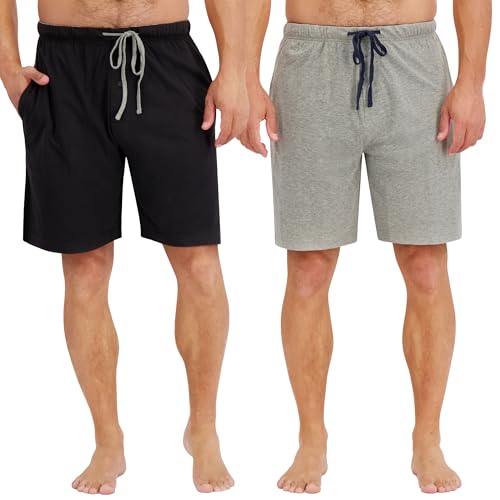
The listed 7.5-inch inseam makes these easier to compare for coverage than shorts described only as loose or lightweight.
Check on AmazonFading describes a loss or change in the garment’s original color appearance. Transfer describes color appearing on another surface or garment. Both can occur in the same event, but seeing one does not establish the other. A pair looking lighter after care is not proof that it stained the rest of the load, and a mark on a pale top does not by itself identify which item supplied it.
Start by looking at the shorts and any affected item separately in consistent light. Is the change spread across the main panels, concentrated along folds or limited to a patch? Is the second item discolored in a way that matches contact with the shorts? These details guide the next question without turning a visual impression into a certain dye diagnosis.
A pale surface layer can also change how fabric looks. Loose lint, residue or a different direction of the surface texture may make an area appear lighter. Do not immediately add a stronger cleaning product to correct what you have not identified. Inspect the surface first and distinguish a color change from material sitting on top of it.
The FTC’s care-label guidance identifies warnings such as washing separately or with like colors when care could affect another item. For your routine, those words belong beside the wash method and temperature. They are not optional decoration at the end of the label.
“Wash separately” and “wash with like colors” describe different instructions. Do not translate both into “put it in the dark load” without reading the actual wording. A separate instruction asks you to keep that item apart during the specified care process; a like-colors instruction still requires compatible garments and care conditions.
Read any first-wash instruction carefully and preserve its scope. A warning that applies to initial care should not become a guarantee about all future color behavior. Conversely, if a label continues to require separation, do not discard the instruction merely because several earlier washes appeared uneventful.
A textile can encounter water, laundering, rubbing and light in different ways. The AATCC standards register lists separate colorfastness methods for laundering, water, light, rubbing and other conditions. That distinction explains why a vague “colorfast” claim needs context before it answers a specific question about sleep shorts.
If a seller supplies a test result, ask which process it concerns and which fabric or garment was evaluated. A result about rubbing does not silently become a result about washing, and a general brand statement does not identify the selected print or color. Keep the claim attached to the property it actually measures.
At home, you can document what you observe, but you are not reproducing those controlled methods. A quick wet-cloth check, if expressly recommended by the maker, can provide limited information about that check. A clear result does not establish permanent freedom from transfer under every wash or wearing condition.
| Observation | Useful first distinction | Next step |
|---|---|---|
| Shorts look lighter overall | Compare in the same light and inspect for surface residue | Record care history and seek model-specific advice if unexpected |
| Pale garment has a new colored mark | Identify what shared the wash or direct contact | Keep it apart and follow its own compatible care guidance |
| Color appears after rubbing contact | This differs from a laundering observation | Document the contact and ask about the relevant model |
| Color change appears only on a trim | Separate trim behavior from the body fabric | Show the complete garment and label to the maker |
| Loose pale fibers sit on dark cloth | May be lint rather than dye loss | Inspect and use a garment-appropriate lint method |
First remove items whose instructions conflict with the planned process. Then apply the shorts’ color-sorting warning to the remaining compatible items. A pale trim on a dark garment matters because the complete item joins the load, not just its dominant color. If the instruction is unclear about a contrasting set, ask before assuming both pieces can share your usual wash.
Check pockets for paper and other objects that could add marks or residue. This is a simple preparation step, especially when shorts are used for lounging as well as sleeping. It does not solve dye transfer, but it eliminates another avoidable source of discoloration that can confuse the result.
Use the detergent and any additives only as their instructions and the garment label allow. A product marketed for colors does not override a wash-separately warning. Nor should a color-catching product be treated as permission to combine items that the maker tells you to keep apart. The sorting decision should stand on its own.
Imagine a set includes navy shorts and a pale top, but their labels give different sorting instructions. The shorts say wash separately, while the top has its own compatible wash route. The matching appearance of the set does not make it one automatic load. Plan the care for each piece according to the supplied instructions, even if you wear them together.
Now suppose they were washed together and the top has a new blue mark. Keep the pieces apart while you inspect the result. Record the actual process and all items that shared it. The navy shorts are a plausible source to investigate, but do not claim certainty if other blue items were present or the mark’s origin is unclear.
For any next treatment, the pale top’s own label and the treatment product’s compatibility matter. This guide does not provide a stain-removal recipe. Avoid escalating to heat, bleach or a household mixture on the assumption that every transferred color responds the same way. Use specific maker or product guidance for the affected item.
The practical lesson is about the sequence: identify the sorting requirement before washing, then preserve the evidence if an unexpected change occurs. A matching set is a styling relationship, not proof that contrasting pieces share identical care or color behavior.
The selected color or assortment is part of the product information. The PNAEONG pink three-pack listing and Hanes Heather Grey/Black pajama shorts listing identify particular assortments in their titles. If sorting compatibility is important to you, request the labels for those exact contents rather than relying on another color’s review. Compare alternatives in our sleep shorts collections or inspect the exact PNAEONG Amazon listing for the selected pack.
When the pack arrives, inspect each pair rather than assuming one label covers every color. Retain the color name with any care photograph you save. That makes a later question more precise and avoids confusing two visually similar shorts from different purchases.
An old review may describe a different assortment or version. Look for a match to the selected item before treating the report as relevant. A useful review can alert you to a question worth asking, but it does not establish that every pair in the brand will behave the same way.
Do not add vinegar, salt or another household mixture on the assumption that it will permanently set an unknown dye. This article has no garment-specific evidence that such a treatment is appropriate or effective. A confident-sounding recipe cannot supply the missing information about the fabric, colorant and finished construction.
If the maker recommends a particular preliminary check, follow it exactly and keep the result narrow. Do not repeatedly wet or rub a returnable garment to force a yes-or-no answer about all future care. That can change the item while still failing to answer the broad question you intended to test.
A better pre-purchase question is whether the selected garment carries separation or color-transfer warnings and what normal care the maker specifies. That information directly affects your routine. If separate care is inconvenient, choose another item with instructions you can follow rather than trying to modify the dye behavior yourself.
Photograph the garment in consistent light, including both the affected area and an overall view. Add the label, selected color, order identity and actual care settings. Describe whether you observed fading on the shorts, a mark on something else or both. If the process is partly unknown, preserve that uncertainty rather than replacing it with your usual routine.
Contact the seller or maker before applying an unrelated treatment that could obscure the original issue. Ask a focused question about the observed result and the applicable care instruction. This makes it easier to distinguish a product concern from a sorting mismatch or a different surface problem.
If the shade change is purely cosmetic and you still enjoy the shorts, you may decide to keep using them under their instructions. If transfer affects other items or the appearance no longer suits you, resolve that practical issue before combining them again. The decision should follow what happened to this garment, not a blanket rule that all dark sleepwear bleeds or all familiar fabrics retain color equally.
Not necessarily. Inspect the shorts and the other item separately and record what actually changed. The two events can coexist, but one does not prove the other.
Do not use it to override the garment’s sorting warning. Any additive or laundry aid must fit the permitted care plan.
Do not assume so for an unknown finished garment. Use the maker’s specific instructions rather than a general household dye-setting recipe.
Keep color change, color transfer and surface residue separate in your assessment. Follow the selected garment’s sorting instructions, document an unexpected result and avoid improvising a treatment for a dye system you have not identified.
As an Amazon Associate I earn from qualifying purchases.
Cotton and a three-pair quantity are explicit in this women's pajama-bottom listing.
Check on AmazonThe listed 7.5-inch inseam makes these easier to compare for coverage than shorts described only as loose or lightweight.
Check on AmazonThe details
A stain-removal decision starts with two labels and a clear description of the mark.
The details
A practical wash sequence from pockets to the drying handoff.
The details
Inspect the surface before removing anything from it.