Hanes
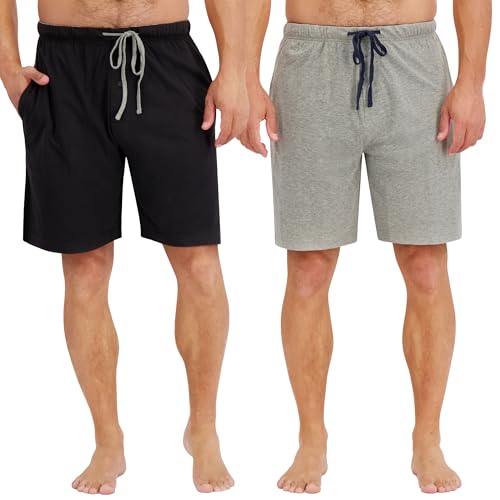
Hanes Cotton Pajama Shorts 2-Pack, 7.5 Inch
The listed 7.5-inch inseam makes these easier to compare for coverage than shorts described only as loose or lightweight.
Check on AmazonThe details / Sleepwear guidance
Choose the drying method from the whole garment’s instructions, then make that method practical at home.
The wash is finished, the dryer is empty, and the shorts are still wet. This is where a familiar shortcut can go wrong: treating all sleepwear as one load because every pair feels similarly lightweight.
Sleep shorts can go in a dryer when the exact garment’s care instructions permit tumble drying. A machine-washable label does not, by itself, answer the drying question. The practical task is to identify the permitted method and give the complete garment enough attention to finish it properly.
As an Amazon Associate I earn from qualifying purchases.
The listed 7.5-inch inseam makes these easier to compare for coverage than shorts described only as loose or lightweight.
Check on Amazon
This is the standard Originals Comfywear two-pack, kept distinct from the separately named Supersoft 3.25-inch model.
Check on AmazonLocate the drying instruction before moving the wet shorts. In the GINETEX system, a circle inside a square identifies tumble drying; line marks inside the square describe natural drying. Use the complete care-symbol key if a modifier is unclear. This guide takes the next step: arranging the machine, rack or flat support that the decoded instruction requires.
If the label prohibits tumble drying, use its stated alternative. If the instruction is missing or contradictory, obtain the exact style’s directions before choosing a method.
| What the garment actually says | Your next decision | What would not establish permission |
|---|---|---|
| Tumble dry with a stated restriction | Match the machine setting to that restriction | The shorts are mostly cotton |
| Line dry | Arrange suitable hanging space and follow any added conditions | Another pair from this brand goes in the dryer |
| Dry flat | Prepare a supported flat drying area | The waistband looks strong enough to hang |
| Natural drying in shade | Use the specified form of drying away from direct sun | Outdoor weather seems mild |
| Unclear or conflicting instructions | Resolve the label or exact model details before choosing | The listing calls them easy care |
For permitted tumble drying, look at the names and explanations of your own appliance’s controls. A cycle name such as casual or delicate is not a universal temperature specification. Use the appliance manual when you need to understand what a setting does, then choose within the garment’s stated limits.
Keep any additional garment directions with that decision. A label may contain handling requirements beyond heat. Drawstrings, decorative edges, and attached components are part of the pair you are drying. Follow any specific instruction for them; do not replace it with a brand-wide routine remembered from different shorts.
For natural drying, the first constraint is physical space. Line drying requires somewhere appropriate to hang the garment, while flat drying requires support for its laid-out shape. Decide where that space will be before you start a laundry load that depends on it. A laundry plan that assumes an unavailable rack often ends in an improvised method at the last moment.
If flat drying is specified, lay the shorts out in their ordinary shape on a suitable supported drying surface. Arrange the legs and waistband without pulling them wider or longer. If the label instructs reshaping, treat that as arranging the garment, not stretching it to a wished-for size. Keep the care instructions as the boundary for any handling technique.
Look at the bulky areas when arranging the pair. A folded waistband, bunched pocket bag, or rolled hem can make it hard to judge how the entire garment is progressing. Gently arrange these parts so you can inspect them without tension. Do not measure a damp pair and decide to force it back to a dry reference dimension.
Flat drying takes room in a different way from hanging. If your available shelf only supports half the shorts, find a larger permitted setup. Letting an unsupported section dangle is not the same arrangement as laying the whole pair flat. You do not need a special sleepwear accessory; you do need a setup that matches the instruction.
If your home setup depends on tumble drying, ask for the exact drying instructions before ordering. This applies to a Hanes men’s two-pack as much as a women’s Originals two-pack: neither selected offer has a verified drying method here. Check the Originals offer on Amazon or another option in the collections against that requirement before committing.
Consider a hypothetical load with three adult pairs whose labels give different answers. Pair A permits tumble drying with a restriction. Pair B specifies line drying. Pair C specifies flat drying in shade. These are example instructions, not care claims for the products linked here.
Before transferring the load, separate the three pairs by those instructions. Read the appliance controls for Pair A. Reserve appropriate hanging space for Pair B. Lay Pair C on a supported surface in a place consistent with its shade requirement. The fact that all three were washed together does not make their next steps identical.
If the rack is occupied, free suitable space before starting the next load. The different drying arrangements are part of planning the load, even when all three pairs can share a wash.
Finally, inspect each complete garment when you think it is ready. Check the waistband and layered areas, then decide whether it is ready for storage. There is no universal number of hours for the three pairs: different garments and drying environments do not give us a defensible shared clock. The practical endpoint is the condition of each pair under its permitted method.
When a label asks for reshaping, use the garment’s ordinary seams and panels as your guide. Align rather than pull. A hem lying crooked because one leg is folded underneath is an arrangement issue; a dry garment that has changed dimensions is a different problem.
If the shorts no longer match their previous fit after care, record that change separately. Do not repeatedly manipulate a wet waistband or lengthen the legs in an attempt to guarantee a fix. The guide to sleep-shorts shrinkage explains how to document dimensional change without promising reversal.
Likewise, a stain that remains after washing should prompt its own decision before you automatically finish the load. See what to check before stain treatment if you are considering another attempt. The drying label tells you which drying method is permitted; it does not determine whether your stain treatment is complete.
Keep a readable photograph of each distinct care label with the style name. For a multipack, compare the received labels before grouping the pairs under one drying instruction. That small reference helps you separate the next load without relying on color or memory.
No. Read the drying instruction separately. A garment can permit machine washing while specifying a different way to dry.
That would still be tumble drying. Follow the stated restriction and use the permitted alternative; ask the maker if the instructions leave that alternative unclear.
There is no reliable universal duration for an unspecified garment and environment. Follow the permitted arrangement and assess the whole pair, including layered waistbands and pockets, before storage.
The dryer is suitable only when the exact pair’s instructions allow it. Read drying separately from washing, prepare the space a permitted natural method needs, and assess the whole garment rather than relying on a fabric-based temperature or fixed timetable.
As an Amazon Associate I earn from qualifying purchases.
The listed 7.5-inch inseam makes these easier to compare for coverage than shorts described only as loose or lightweight.
Check on AmazonThis is the standard Originals Comfywear two-pack, kept distinct from the separately named Supersoft 3.25-inch model.
Check on AmazonThe details
Turn a row of symbols into one complete care instruction.
The details
Measure the dimension that changed, not just the size label.
The details
A stain-removal decision starts with two labels and a clear description of the mark.
The details
A waistband-first fold designed around finding and removing a pair, not packing the drawer as tightly as possible.
The details
Both official styles are modal-rich; the useful differences are the design details and drying commitment.
The details
A packing plan built around usable laundry time.
The details
A practical wash sequence from pockets to the drying handoff.