Hanes
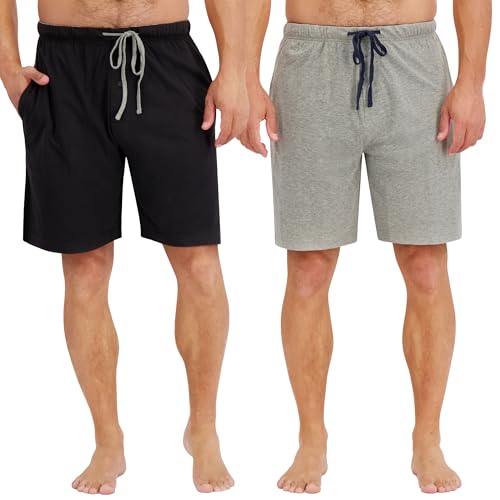
Hanes Cotton Pajama Shorts 2-Pack, 7.5 Inch
The listed 7.5-inch inseam makes these easier to compare for coverage than shorts described only as loose or lightweight.
Check on AmazonThe details / Sleepwear guidance
A packing plan built around usable laundry time.
The smallest sleepwear bundle is not always the easiest one to travel with. A good packing plan gives each pair a role and leaves enough flexibility for a missed wash or unfinished drying, without inventing a fixed number of wears for every traveler.
As an Amazon Associate I earn from qualifying purchases.
The listed 7.5-inch inseam makes these easier to compare for coverage than shorts described only as loose or lightweight.
Check on Amazon
This is the standard Originals Comfywear two-pack, kept distinct from the separately named Supersoft 3.25-inch model.
Check on AmazonTrip length matters, but it is not the only number that determines what to pack. A seven-night stay in one apartment with usable laundry is different from seven nights in several hotels with early departures. Before counting shorts, mark the days on which you could realistically wash, dry and repack them. An appliance somewhere in the building is not yet a workable plan.
Ask concrete questions. Will you have access when you are there? Can you use the drying method the garment requires? Is there space for flat or line drying if that is specified? Will you leave before you can establish that the garment is fully dry? These are scheduling questions, so answer them from your itinerary and accommodation details rather than from a fabric’s reputation.
Do not assume a room sink turns every garment into washable travel clothing. The care method belongs to the finished shorts, including their construction and trims. The FTC’s care-label guidance explains why the complete garment matters. For your packing decision, the practical implication is simple: use the method on the actual label, not a generic instruction attached to the fiber name.
Lay out the candidate pairs and read their care labels. Write only the details that affect the trip: whether home washing is permitted, the relevant cycle or temperature limits, and the drying method. If a label is unclear, resolve that before relying on the pair for mid-trip laundry. A photograph of the label can help you remember the instructions away from home.
Next match each pair to the facilities. Machine-washable shorts that prohibit tumble drying do not fit a plan based solely on a hotel dryer. A garment needing flat drying is awkward if every available surface must be packed away each morning. It may still travel well if you bring enough pairs to avoid washing it during the trip. The mismatch is with the plan, not necessarily the garment.
Keep the comparison at this practical level. Do not promise that cotton, modal, linen or satin will dry overnight. Garment thickness, layers, water remaining after care and the actual drying environment make a fixed timetable unreliable without relevant testing. “I can leave this undisturbed until it is dry” is a stronger planning fact than “this material should be quick.”
| Trip detail | Packing implication | Question to settle |
|---|---|---|
| One base with a suitable laundry area | A planned wash may reduce the number carried | Does the garment’s label match the facilities? |
| Several early checkouts | Less opportunity to complete drying | Can the plan work without mid-trip washing? |
| Laundry access is uncertain | A spare pair has practical value | What happens if the service is unavailable? |
| Only tumble drying is convenient | Dryer restrictions become a major filter | Is tumble drying explicitly permitted? |
| Tight luggage space | Compare actual folded volume | Which unused extras can be removed first? |
A spare is best understood as protection against a specific gap: a missed wash, an unexpectedly damp garment or a change to the itinerary. It does not need to follow a fixed hygiene timetable. Decide how you prefer to change and care for your sleepwear, then make sure the plan covers the longest interval before the next reliable laundry opportunity.
If you usually decide whether to change a pair based on its condition and your preference, retain that judgment during the trip. Pack enough to make that choice possible. Avoid calculating the absolute minimum by assuming every planned wash succeeds. A modest amount of flexibility can be more useful than a tightly optimized list that depends on a single evening going exactly as expected.
A two-pack can fill two different places in a travel bag. If you choose the Hanes pajama shorts two-pack, you could put one pair with your first-night clothing and keep the second accessible as the planned spare. Pack both only if your itinerary calls for them; otherwise leave the extra at home. Confirm the selected pack on Amazon, or use the collections to find a shape that fits the space and care plan you already established.
Consider a hypothetical six-night trip: two nights at the first hotel, three at an apartment, then one near the airport. The apartment is your only plausible laundry stop. You plan to wash during the first apartment evening, leaving later time there for label-permitted drying. Your final hotel is a fallback sleeping stop, not a dependable laundry opportunity.
Begin by counting how many pairs you want available before reaching the apartment according to your own changing preferences. Then cover the period after the wash through the last night. Finally, ask what happens if the apartment machine is unavailable. You might add one spare, arrange a verified laundry service or take enough pairs to avoid depending on that wash. Choose the response that fits luggage space and how much inconvenience you accept.
Suppose one candidate pair requires flat drying and your apartment confirmation shows only a shared machine, with no suitable drying space identified. Do not treat that pair as your planned wash-and-rewear option. Either confirm the missing facility, choose another pair whose label fits the available process, or carry it with the intention of washing after returning home.
The same logic explains why a shorter trip may require as many packed pairs as a longer one. Three rushed stops can provide less useful laundry time than a week in one place. Counting nights without mapping the care opportunity misses the reason a spare is there.
Fold the shorts into the shape you normally pack and place them in the actual packing cube or compartment. Include the top if you always wear them as a set. Comparing shorts alone with a complete alternative outfit gives a misleading impression of the space saved. A bulky waistband or pockets may occupy more room than expected even when the leg panels look light.
Try both a flat fold and a loose roll if the garment allows ordinary handling. Choose the arrangement that uses your compartment well and leaves the pair easy to identify. There is no need to claim that one method universally saves the most space. Your bag’s shape, other clothing and the garment’s details determine what works in that packing arrangement.
Do not use aggressive compression as a substitute for reducing unnecessary items. If the bag becomes difficult to close, first remove pairs you are unlikely to use or a duplicate top that adds little flexibility. Preserve the spare that solves an actual laundry gap before keeping an extra that has no clear role.
Give used sleepwear a separate place in your bag so you can identify what is available without unfolding everything. That can be a washable laundry pouch or another compartment you already use. The purpose is organization: it helps prevent a pair awaiting care from being mistaken for the spare you planned to keep ready.
If a garment is still damp when you must move, recognize that it is not ready to be stored with fully dry clothing. Arrange the next opportunity to finish the permitted drying process and keep it separate in transit as appropriate for the journey. Do not plan to leave damp shorts compressed for the remainder of the trip or describe a sealed pouch as a drying solution.
Before the final departure, check the wardrobe, drying area and bathroom hooks. Sleepwear is easy to leave behind because it may be away from the rest of the luggage. A short location check is more effective than assuming every item returned to the packing cube after use.
The lightest theoretical packing list can be the least convenient if it demands laundry at the end of a busy day. Be realistic about what you want to do while away. If a spare pair removes a task you do not want, that extra volume may be worthwhile. If you enjoy using the apartment laundry, a smaller rotation may suit you.
After the trip, note which pair stayed unused and which care step was inconvenient. Those observations can improve the next packing list without turning one trip into a rule for every destination. Your most useful travel sleep shorts are the ones whose fit, care and packed size work together with the schedule you actually keep.
Use your changing preferences and the longest gap before reliable laundry rather than a universal count. Add flexibility if one missed wash would leave you without a pair you want to wear.
No. A lightweight description does not establish a drying time. Plan around the permitted method, actual facilities and enough time to confirm the garment is dry.
Only if every pair serves the trip. A pack count is a purchase detail; your itinerary, preferred rotation and spare-pair need determine what belongs in the bag.
Choose the smallest comfortable rotation that still works if the likely laundry plan changes. Label-compatible care and an honest itinerary matter more than an unverified quick-drying promise.
As an Amazon Associate I earn from qualifying purchases.
The listed 7.5-inch inseam makes these easier to compare for coverage than shorts described only as loose or lightweight.
Check on AmazonThis is the standard Originals Comfywear two-pack, kept distinct from the separately named Supersoft 3.25-inch model.
Check on AmazonThe details
Choose the drying method from the whole garment’s instructions, then make that method practical at home.
The details
A practical drawer calculation that starts with your real laundry cycle and what you already wear.
The details
A larger pack is useful only when its extra pairs are useful.
The details
A waistband-first fold designed around finding and removing a pair, not packing the drawer as tightly as possible.