Hanes
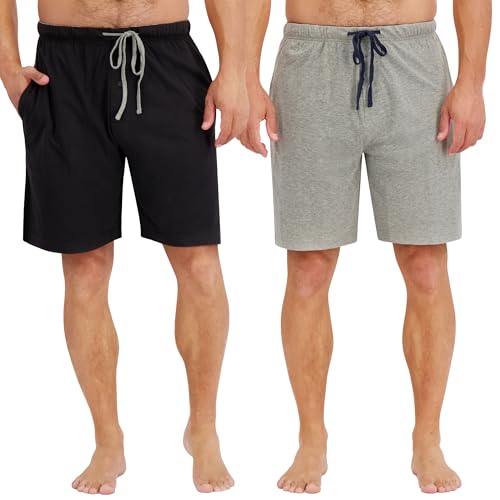
Hanes Cotton Pajama Shorts 2-Pack, 7.5 Inch
The listed 7.5-inch inseam makes these easier to compare for coverage than shorts described only as loose or lightweight.
Check on AmazonThe details / Sleepwear guidance
A practical drawer calculation that starts with your real laundry cycle and what you already wear.
A drawer can look full and still leave you without a pair you want to wear. Three shorts may be waiting for laundry, two may no longer fit, and the remaining pair may belong in a travel bag. Counting fabric rectangles does not tell you how many usable pairs are available.
The useful number comes from your own rotation: how many fresh pairs you choose to use before washed pairs become available again, plus any deliberate reserve. This is a household planning exercise, not a recommended hygiene schedule.
As an Amazon Associate I earn from qualifying purchases.
The listed 7.5-inch inseam makes these easier to compare for coverage than shorts described only as loose or lightweight.
Check on Amazon
This is the standard Originals Comfywear two-pack, kept distinct from the separately named Supersoft 3.25-inch model.
Check on AmazonEnter your laundry interval, chosen wears per pair and spare pairs in the sleep shorts rotation planner. The calculation below explains how to adapt the result to your drawer.
Gather the sleep shorts you actually consider part of your ordinary rotation. Include pairs in the hamper and laundry area so you do not mistake a temporary absence for a shortage. Keep a separate note for any pair reserved for travel, another home, or another specific purpose. It can only cover tonight’s gap if you are willing and able to use it tonight.
For each pair, ask a concrete question: would I choose to wear this when it is clean and ready? If the answer is no because of fit, an uncomfortable closure, or damage, do not count it as dependable capacity. You do not have to make an immediate disposal decision. Simply avoid allowing an unusable pair to reduce the calculated shopping gap.
Split your count into three columns: in the regular rotation, usable but reserved, and currently unsuitable. This small audit absorbs the common drawer problem without turning it into a separate organizing project. The aim is an honest starting number. Seven owned pairs might mean five available rotation pairs, one travel reserve, and one waiting for an assessment.
| Drawer status | Count toward everyday supply? | Example |
|---|---|---|
| Clean or in laundry; normally worn | Yes | A comfortable pair waiting to be washed |
| Reserved and you want to keep it separate | No, unless you release the reserve | Shorts already packed for a trip |
| Fit or function prevents use | No | Waistband no longer stays in place |
| Usable but consistently passed over | Only if you would really use it | A style you dislike but might wear as backup |
| Belongs to someone else’s rotation | No | A partner’s similar-looking pair |
A reset is the point when cleaned and appropriately dried shorts are ready to wear again. It is not necessarily the moment the washing machine starts. If the shorts are still drying when you need them, they cannot yet close the gap in your rotation.
Choose a representative interval between these ready-to-wear resets. Your normal arrangement might be a shared weekly laundry day, several smaller loads, or an irregular schedule around work. Use what happens in your home rather than an ideal routine that rarely occurs. If the interval varies, choose which delay you want your drawer to cover and state it explicitly.
Next count how many fresh-pair starts you choose during that interval. That phrase means occasions when you decide to begin using another clean pair. It avoids assuming that everyone changes sleep shorts at a universal rate. The calculation accepts your own practice as an input and does not tell you how often garments should be cleaned.
A short diary can be more accurate than memory. Over one ordinary laundry cycle, record when a fresh pair enters use and when cleaned pairs become ready again. Do not alter your routine to make the numbers neat. If a guest stay, trip, or unusual spill changes that particular cycle, note it so you can decide whether it belongs in the normal baseline or reserve.
You can obtain the first input by counting actual fresh-pair starts. If your pattern is regular, another option is fresh pairs per day multiplied by the number of days between usable-laundry resets, rounded upward when the result is fractional. Direct counting is usually clearer for an irregular routine or a mix of sleep shorts and other sleepwear.
Keep the reserve purposeful. A reserve of one pair means you want one additional fresh-pair start available beyond the baseline. A larger reserve should correspond to a larger delay or another named circumstance. “Just in case” is difficult to evaluate because it has no endpoint. “Enough for one missed laundry opportunity” is something you can count.
Imagine a person counts six fresh-pair starts between typical ready-to-wear laundry resets. They want one extra pair to cover a modest delay. Their target rotation is therefore seven pairs. The drawer audit found five usable pairs in normal rotation, so the calculated purchase gap is two.
The same person owns eight pairs in total, but three are excluded: one is reserved for a travel bag and two are uncomfortable enough that they are never chosen. Counting eight would have suggested no shortage; counting actual rotation capacity explains why laundry days feel tight. Conversely, buying a large multipack without doing this audit could add more than the two-pair gap.
Now change one input. If the wearer decides the travel pair can return to ordinary use, the usable rotation rises to six and the gap falls to one. If they prefer to protect the travel reserve, the gap remains two. Neither choice is mathematically superior. The calculation simply makes the consequence of that preference visible.
| Scenario | Baseline fresh-pair need | Reserve | Usable pairs | Purchase gap |
|---|---|---|---|---|
| Ordinary rotation | 6 | 1 | 5 | 2 |
| Release a reserved pair | 6 | 1 | 6 | 1 |
| Cover two additional fresh-pair starts | 6 | 2 | 5 | 3 |
| Improve turnaround by one required pair | 5 | 1 | 5 | 1 |
These numbers are illustrative inputs, not a recommendation to own seven pairs or follow a particular change schedule. Your own baseline can be smaller or larger. The important feature is that each change has a reason, and the result can be checked against actual shortages.
Once you have a gap, pack quantity becomes useful information. The Hanes men’s pajama shorts listing explicitly describes a two-pack. The Hanes women’s Originals listing also describes a two-pack. Either illustrates a pack format that could fill a two-pair gap if that exact product otherwise fits the wearer’s needs. Quantity alone does not establish suitability.
Review the exact Hanes men’s two-pack on Amazon for the selected product, or compare appropriate styles across the sleep-shorts collections. Count garments you will use, including whether both colors appeal to you. A pack containing one permanently ignored pair does not add its full advertised quantity to your effective rotation.
Do not confuse a two-piece set with two pairs of shorts. A top-and-shorts set supplies one shorts pair. Likewise, a product image showing several colors might illustrate choices rather than the delivered pack. Resolve the actual contents before subtracting a pack from your gap. The separate multipack-value guide covers that buying decision in more detail.
In a household, laundry timing may be shared while rotations remain individual. Calculate each wearer’s baseline and reserve separately, then plan the combined load around the available drying space. One person’s spare pair is not automatically a substitute for another person’s fit or preference.
If several people repeatedly run short on the same day, inspect the timing before adding garments everywhere. Perhaps the reset is later than the household assumes because one category needs a different drying method. A more accurate reset definition may explain the shortages and let you decide between more capacity and a different laundry arrangement.
Seasonal or occasional garments deserve the same clarity. If you alternate shorts with other sleepwear, count only the fresh shorts pairs you actually start during the chosen interval. You do not need a full shorts rotation for days when you intentionally wear something else. Equally, do not rely on alternatives you know you would avoid.
After using the calculated rotation, note whether shortages still occur and what caused them. A one-off trip may belong in a packing plan. A repeated laundry delay may justify changing the reserve. A pair that stops fitting changes usable inventory. Each is a specific reason to update the count.
There is no need to keep increasing the drawer simply because a larger pack is available. Once your chosen scenario is covered, additional pairs serve a different purpose, such as style variety. That can be a valid preference, but distinguish it from solving a shortage.
If a pair’s condition is the uncertain input, use the replacement triage before counting it as dependable. If the problem is getting the clean pairs visible and accessible, the folding and storage guide addresses access without changing how many pairs the calculation says you need.
No. The useful count depends on your own fresh-pair use, laundry turnaround, reserve preference, and usable existing rotation. A universal number would hide those differences.
Yes, if it normally returns to your usable rotation after care. Count it in inventory while allowing for when it becomes available again.
Decide whether the second pair has a real role. You can choose a single-pair option or knowingly add a reserve; the pack size should not silently redefine your need.
Count usable rotation pairs first, then calculate the fresh pairs needed until laundry is ready again and add a deliberate reserve. The difference is your shopping gap. This gives you a practical number without prescribing a hygiene schedule or rewarding an overfilled drawer.
As an Amazon Associate I earn from qualifying purchases.
The listed 7.5-inch inseam makes these easier to compare for coverage than shorts described only as loose or lightweight.
Check on AmazonThis is the standard Originals Comfywear two-pack, kept distinct from the separately named Supersoft 3.25-inch model.
Check on AmazonThe details
A larger pack is useful only when its extra pairs are useful.
The details
A waistband-first fold designed around finding and removing a pair, not packing the drawer as tightly as possible.
The details
Replacement is a function decision, not a birthday assigned to every garment.
The details
A packing plan built around usable laundry time.