Hanes
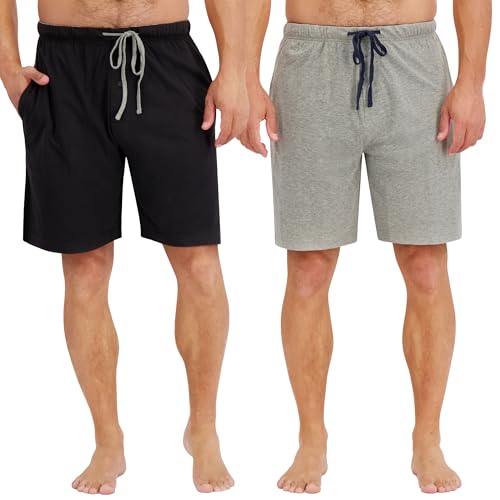
Hanes Cotton Pajama Shorts 2-Pack, 7.5 Inch
The listed 7.5-inch inseam makes these easier to compare for coverage than shorts described only as loose or lightweight.
Check on AmazonThe details / Sleepwear guidance
Replacement is a function decision, not a birthday assigned to every garment.
An old pair with faded color may still do everything you need. A newer pair whose waistband no longer stays in place may not. Age and appearance are clues about a garment’s history, but they do not answer whether it remains useful to you.
Assess the function that has changed: retention at the waist, integrity of seams and fabric, closure operation, or the coverage you depend on. Then choose among keeping the pair, seeking a professional assessment, and replacing it. There is no fixed lifespan or home-repair recipe in this triage.
As an Amazon Associate I earn from qualifying purchases.
The listed 7.5-inch inseam makes these easier to compare for coverage than shorts described only as loose or lightweight.
Check on Amazon
A stated 7-inch length, cotton knit construction, drawstring and elastic waistband make this one of the clearer title-level specifications.
Check on AmazonDescribe the problem in ordinary terms. “The waist slides down unless I hold it” is a function report. “The fabric looks older” is an appearance report. “The crotch seam has a visible opening” identifies a structural location. A clear description helps you decide whether the issue is tolerable, assessable, or already enough to stop using the pair.
Use your normal expectations as the reference. You may want shorts that remain in place without constant adjustment, provide a particular amount of coverage, and have working pockets or a closure you use. A feature you never use may matter less to your decision than one central to how you wear the garment.
Do not begin by comparing the pair with a brand-new photograph. Ordinary wear can change appearance without making the shorts unsuitable. Conversely, an attractive surface does not cancel a seam opening or a waistband problem. Examine the actual pair rather than letting either age or appearance make the entire decision.
| Finding | First distinction | Reasonable next choice |
|---|---|---|
| Fading or a cosmetic mark | Does it affect use or only appearance? | Keep if the appearance is acceptable after normal care |
| Waist no longer holds its position | Is the change recent, and does the pair otherwise fit? | Assess the waistband or replace if retention is no longer workable |
| Localized opening along a seam | Is stitching separated, and what is the neighboring fabric like? | Professional assessment if you want to keep the pair |
| Fabric damage across several areas | How much usable garment remains? | Consider replacement without assuming a local repair solves everything |
| Broken feature you rely on | Does it prevent intended use? | Ask about repair feasibility or choose a replacement with that feature |
| Different fit with no visible failure | Have your fit needs or the garment dimensions changed? | Evaluate current fit before diagnosing worn-out material |
Empty the pockets and remove any unusual load before assessing retention. Wear the shorts in their ordinary position and note whether the waistband stays where you expect during normal standing and sitting. Avoid stretching it to its maximum as a test; that does not recreate the way you need it to function.
If there is an adjustable drawstring, use it as intended and note whether ordinary adjustment provides a workable fit. Do not keep tightening it simply to compensate for another unresolved fit problem. A waistband that has changed over time and a garment that never fitted your body well are different histories.
Look at the casing and attachment for obvious twisting, breaks, or openings. These observations can help a professional understand the concern, but they do not identify every internal cause. If the pair is still in otherwise useful condition and you want to keep it, ask whether its particular waistband construction can be assessed or altered.
The falling-down guide handles the more detailed distinction between waistband retention, pocket load, and fit. Here the endpoint is simpler: decide whether the existing pair still gives you acceptable function, and whether further assessment is worthwhile.
An opening along a stitched joint is not the same observation as a hole in the fabric panel beside it. Examine the area in good light without pulling it apart. Note whether you see interrupted stitching, torn material, or both. A repair professional needs that distinction because the surrounding garment matters as much as the visible opening.
Do not assume that a seam opening guarantees an easy repair or that every hole makes repair impossible. Both judgments depend on construction, location, and condition. You can make the decision to seek an assessment without pretending to know the technical answer in advance.
If the same pair has several separate damaged areas, list them together. Evaluating a single small opening in isolation can hide the fact that the waistband, hem, and pocket are also no longer functioning as needed. Give the professional the whole picture, or use it to decide that replacement is the route you prefer.
Small surface pills, a snag, and visible thinning are different observations. Do not shave, cut, pull, or otherwise alter the area as part of this triage. First establish what has changed and whether coverage or ordinary use is affected.
The inner-thigh wear guide helps distinguish localized thinning from broken stitching and pilling. A detailed wear diagnosis belongs there. For replacement, the relevant question is whether the condition now prevents the pair from meeting your needs.
Imagine Pair A has faded evenly but still sits comfortably at the waist, has intact seams, and provides the coverage its wearer wants. Pair B retains its original-looking color but slides down and has a visible opening near a pocket attachment. The brighter pair is not automatically the better one to keep.
Pair A can remain in use if its appearance is acceptable to the wearer. Pair B needs a decision about two separate functions. If the wearer strongly wants to retain it, a professional can assess the waistband and pocket area together. If the wearer would not pursue that work, it is reasonable to choose replacement because the pair no longer meets the stated needs.
Now add a third possibility: Pair B never stayed up well, even when new. That changes the interpretation. A replacement in the same size and shape may repeat an original fit mismatch. The next purchase should address retention and overall cut rather than assuming that newer elastic alone is the answer.
Write the requirement that the old pair no longer meets before browsing. If you need both adjustment and pockets, the Hanes men’s 7.5-inch two-pack explicitly lists a drawstring and pockets. If your priority is an explicitly listed elastic waistband with a drawstring, the Amazon Essentials 7-inch two-pack names that combination. These are feature-based candidates, not assurances about how long their waistbands will last.
Compare the selected Amazon Essentials offer on Amazon with your size and closure requirements, or use the men’s sleep-shorts collection for other cuts. A pack is useful only if you will wear the included pairs. Do not let its quantity distract from the specific function you are trying to restore.
Bring forward the successful details too. If you liked the old pair’s length but disliked its waist arrangement, you do not have to abandon both. Record the useful length reference and prioritize a different documented waistband design. This turns replacement into a targeted selection instead of a broad search for a supposedly indestructible fabric.
No supplied evidence establishes that adult sleep shorts must be replaced after a fixed number of months, wears, or washes. Their use, construction, care history, and your requirements differ. A routine glance when handling the garment can reveal changes, but this guide does not prescribe an inspection schedule.
When you do notice a problem, be specific about the next step. Keep the pair because it still works, set it aside for an assessment you intend to obtain, or replace it because the function is no longer acceptable. Avoid counting a pair you consistently cannot use as dependable wardrobe capacity.
If replacement leaves you wondering how many new pairs to obtain, the rotation calculator separates usable inventory from garments that no longer serve. The condition decision comes first; the quantity calculation follows from it.
There is no universal lifespan established here. Assess present fit and function, including the waistband, seams, fabric, and features you use.
No general answer applies to every construction. A garment-repair professional can assess the exact waistband and surrounding condition if you want to retain the pair.
Fading alone is an appearance change. If the shorts still meet your needs and you accept how they look after normal care, it does not automatically create a replacement need.
Replace a pair for a concrete loss of usefulness, not because it reaches an invented age. Keep acceptable cosmetic wear, seek professional assessment when retaining a localized problem is worthwhile to you, and choose any replacement around the function that failed.
As an Amazon Associate I earn from qualifying purchases.
The listed 7.5-inch inseam makes these easier to compare for coverage than shorts described only as loose or lightweight.
Check on AmazonA stated 7-inch length, cotton knit construction, drawstring and elastic waistband make this one of the clearer title-level specifications.
Check on AmazonThe details
Trace the movement before tightening the waistband.
The details
Look at where material is changing before deciding what kind of wear you have.
The details
A practical drawer calculation that starts with your real laundry cycle and what you already wear.
The details
A stain-removal decision starts with two labels and a clear description of the mark.
The details
A calm first inspection helps distinguish a wrong item, an observable defect, and a fit preference.
The details
Inspect the surface before removing anything from it.