Hanes
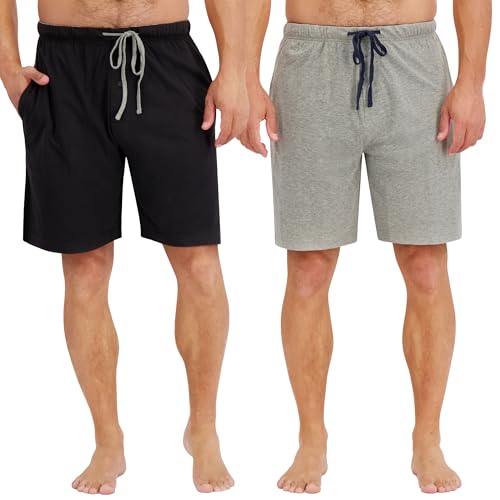
Hanes Cotton Pajama Shorts 2-Pack, 7.5 Inch
The listed 7.5-inch inseam makes these easier to compare for coverage than shorts described only as loose or lightweight.
Check on AmazonThe details / Sleepwear guidance
Watch where the fabric starts moving before choosing a longer leg or another size.
You straighten the legs, take a few steps or turn over, and the hems are back higher than you wanted. “Ride up” describes the result, but it does not identify why that particular pair moves. The hem may catch at the thigh, fabric may be drawn from the seat, or one layer may move differently against another.
A short, repeatable comparison can give you useful clues. It cannot promise an anti-ride-up fabric or diagnose every pattern issue, but it can keep you from changing the wrong feature.
As an Amazon Associate I earn from qualifying purchases.
The listed 7.5-inch inseam makes these easier to compare for coverage than shorts described only as loose or lightweight.
Check on Amazon
The 5.5-inch length wording makes this a useful candidate for someone comparing shorter men's sleep bottoms.
Check on AmazonArrange the shorts normally, then let go. Notice whether one hem rises, both rise, or the entire garment moves upward together. Also note whether the front waistband stays centered. Whole-garment rotation belongs to the separate twisting diagnostic; this guide focuses on upward leg-hem migration.
Some hem movement occurs when a knee bends because the fabric changes position. The practical question is whether the movement exceeds what you want and whether the hem returns to an acceptable place afterward. A short that rises briefly during a large bend is different from one that remains gathered after a few ordinary steps.
Use the movement that reliably reveals your concern: sitting on a sofa, walking across the room or turning from back to side on a clean surface. There is no need to add extreme stretches or a fixed number of repetitions. Keep the observation close to how you actually wear the shorts.
Start with empty pockets and the intended waistband adjustment. That gives you a simpler garment to observe before considering other factors.
When a hem moves, pause before pulling it down. Look at the folds immediately above it and across the seat. Does fabric appear caught at the leg opening while the upper garment stays relatively settled? Or does the movement seem to begin higher, with the hem following fabric drawn toward the seat?
These are clues, not definitive pattern diagnoses. You cannot identify the exact cause of a garment’s balance from a single fold. You can, however, decide whether a different opening or more suitable room higher up is the more relevant next comparison.
If the band and seat feel restricted as well, do not focus only on the last inch of the leg. The size-chart guide can help you assess whether the selected size and proportions are plausible. An open-looking hem does not prove enough room throughout the garment.
If the seat remains comfortable and the hem seems to stop at a particular part of the thigh, concentrate the next check on the opening and its edge.
With the shorts off, inspect the hem construction. Is the opening straight, curved, split, gathered or fitted? Is the finished edge appreciably firmer than the fabric above it? These details can affect how the opening sits, but none provides an automatic explanation by itself.
Put the shorts on and bend the knee in the ordinary position that triggers the issue. Notice whether the hem feels close at the front, back or inner leg. Do not pull it outward while moving; that would artificially hold it away from the very contact you are trying to observe.
A wider opening may be worth comparing when the existing edge seems to catch. But widening the entire garment through a larger size also changes waist, seat and rise. If those areas already suit you, a different leg shape may be a more focused experiment.
The dedicated leg-opening guide explains the shape choices. Here, use the opening check to decide whether that is the likely feature to investigate next, rather than turning the ride-up question into a general hem tutorial.
Sit down slowly in a normal position and watch what happens before the legs gather. If fabric pulls noticeably across the seat or front, and the hems follow that movement upward, adding more length at the bottom may leave the initiating mismatch unchanged.
Compare with a pair whose seat fit you already like. Keep the same seated position. Does the familiar pair allow the fabric to rearrange without leaving the hems caught high? The comparison does not prove which pattern dimension differs, but it identifies a useful fit reference.
Avoid treating every diagonal fold as evidence of a technical fault. Clothes form folds during movement, and home observation has limits. Focus on a repeated behavior you dislike and the places where you feel restriction, rather than diagnosing the pattern from appearance alone.
If the seat and waist have ample room but a long, loose leg still accumulates upward, the problem may be elsewhere. Move to the interaction check rather than assuming another size increase must help.
A short can behave differently against a chair, bedding or another garment. To explore that, change one surrounding condition while keeping the shorts and movement the same. For example, compare the ordinary movement on the same clean surface with and without a top hem lying over the shorts.
If you wear a separate layer underneath, assess whether the outer hem catches near its edge. Do not assume either piece is defective. The combination may simply move in a way you dislike. Our layering guide addresses whether that extra garment adds something you want.
A difference between surfaces is evidence about that situation, not proof that a fiber always causes or prevents riding up. Fabric construction, finishing and the particular layers can vary. Avoid translating a household observation into a guaranteed anti-friction claim.
When a specific interaction seems relevant, a more useful replacement brief is “a hem that does not catch on this inner layer” than “a cooling fabric.” The latter claim would not answer the movement question.
Longer legs may provide more coverage after some upward movement, which can be useful even if they do not eliminate it. That is a different goal from making the fabric stay perfectly still. Be clear about which result would satisfy you.
The catalog offers Hanes pajama shorts with a listed 7.5-inch inseam and Deyeek pajama shorts with 5.5-inch wording. Confirm what Deyeek’s measurement describes before treating it as an inseam or subtracting it from Hanes’ stated 7.5-inch inseam. A verified length comparison can help you judge remaining coverage; it cannot prove which pair rides up less. View the selected Hanes listing or browse long sleep shorts if extra leg length is the experiment your checks support.
If the hem already catches at an uncomfortable point, extra fabric may simply gather there too. Likewise, a longer hem approaching the knee can introduce a contact point you did not have before. Length is one variable to test after observing the original movement.
Imagine a wearer whose 5.5-inch shorts stay comfortable through the waist and seat but rise enough when seated to expose more thigh than preferred. The hem is not noticeably close and returns easily when the wearer stands. They may be satisfied by a longer short that preserves more coverage in the seated position.
Now imagine another wearer with the same listed inseam whose hem catches tightly at the thigh after a few steps. The upper leg feels close, and pulling the hem down only resets the problem temporarily. A longer inseam alone may not address that contact. A different opening or more suitable leg cut is a more relevant comparison.
A third wearer sees the hem rise only when the seat pulls during a bend. For them, the next question is room and shape higher in the garment. Choosing among these paths is the practical payoff of the diagnostic.
None of the examples assigns a universal cause to everyone with a certain thigh shape. They start from observed garment behavior and lead to a specific comparison.
After the initial check, change one meaningful feature if you can: length, opening shape, fit through the seat or the surrounding layer. If you replace all of them simultaneously, you may find a better pair but learn less about why it works.
You do not need to conduct a formal trial or keep a long log. One clear comparison with a familiar garment can be enough to reject an obvious mismatch. If the behavior appears only during actual use and cannot be reproduced, leave the cause uncertain rather than inventing a detailed explanation.
Do not use adhesive products, pins, aggressive stretching or improvised restraints to hold pajama hems down. Those change the garment or the wearing arrangement without resolving whether the cut suits you.
The goal is not zero fabric movement in every position. It is a pair whose movement remains within your coverage and contact preferences without frequent rearranging. A clear distinction between catching at the opening, pulling from above and interaction with another layer makes that goal easier to pursue.
Not necessarily. Extra length may preserve more coverage after movement, but it may also gather at the same catching point. First observe whether the problem starts at the opening or higher in the garment.
No. A close leg or restricted seat can be relevant, but layers, surface interaction and the particular cut may also matter. Compare one feature at a time instead of treating the symptom as a universal sizing rule.
No such guarantee is established here. The finished cut, hem, fit and surrounding layers matter. Choose from observed garment behavior and supported product details rather than a fiber-based anti-ride-up promise.
Watch the movement before choosing a remedy. Use opening contact, seat pulling and layer interaction as clues, then make a focused comparison. Extra length can improve remaining coverage, but no inseam, size change or fiber guarantees that a hem will stay still.
As an Amazon Associate I earn from qualifying purchases.
The listed 7.5-inch inseam makes these easier to compare for coverage than shorts described only as loose or lightweight.
Check on AmazonThe 5.5-inch length wording makes this a useful candidate for someone comparing shorter men's sleep bottoms.
Check on AmazonThe details
A long inseam and a roomy opening solve different problems.
The details
First find out whether the garment moves around you or its shape has changed.
The details
Use a pair you know as the reference; a height chart cannot choose your preferred hem.